Last updated October 16, 2026






Free written scope consultation - allowances, timeline, and change-order rules on paper before a single trade is scheduled
Seasonal Construction Care for Santa Clarita: Year-Round Homeowner’s Guide
In Santa Clarita, the most destructive “season” isn’t winter. It’s October through December, when single-digit humidity, 60 mph Santa Ana winds, and ember cast from wildfires can tear apart a home that looks perfectly fine from the curb. Most national home-maintenance calendars tell you to prep for snow and ice, which leaves SCV homeowners following advice built for a climate 2,000 miles away. This guide maps construction care to the actual rhythm of Santa Clarita: fire season prep in late summer, wind-event response in fall, the short intense rain window in winter, the spring construction sweet spot, and six months of summer heat that quietly breaks down exterior materials. By the end, you’ll know exactly what to inspect, when to inspect it, and which fixes are worth paying for versus which ones just need monitoring.
Quick Answer
Seasonal construction care in Santa Clarita means aligning home maintenance with the SCV’s real seasonal threats: pre-fire-season hardening in August and September, post-Santa Ana wind inspections from October through December, drainage and sealing before the winter rain window, exterior construction scheduling in the spring, and heat-damage monitoring from June through September. The homes that hold up best are maintained on this local rhythm, not the generic four-season calendar. For a detailed Construction Cost Breakdown: The Santa Clarita Homeowner’s Reference for 2026, annual costs for proactive seasonal maintenance typically run $800 to $2,500 depending on home size and age, far less than the $5,000 to $25,000 repair bills that follow neglected wind, fire, and water damage.
Styles & brands we work with






Table of Contents
- Pre-Fire-Season Prep (August to September): Hardening Your Home Before Red Flag Conditions Return
- Santa Ana Season Response (October to December): The Post-Wind Inspection Checklist
- Winter and Rain-Season Prep (December to February): Drainage, Caulking, and Stucco Before the SCV’s Rain Window
- Spring Construction Window (March to May): Why This Is Santa Clarita’s Best Time for Exterior Work
- Summer Heat Management (June to September): What Extreme Heat Does to Your Home’s Exterior
- Common Mistakes to Avoid
- When to Call a Professional
- Frequently Asked Questions
Pre-Fire-Season Prep (August to September): Hardening Your Home Before Red Flag Conditions Return
By August in Santa Clarita, the hills have been baking for three months. The brush is dry. The humidity drops. And every year, the first Santa Ana wind event arrives faster than most homeowners expect. Waiting until a Red Flag Warning is issued to start prepping your home is a losing strategy. The work needs to be done before the winds arrive.
We’ve walked through enough Valencia and Saugus and Canyon Country homes in late summer to know what holds up and what doesn’t. Here’s the inspection order that matters most:
- Check every exterior vent. Attic vents, crawl space vents, and dryer vents are the primary entry points for wind-driven embers. The open mesh on standard vents is wide enough for embers to pass through. In Santa Clarita’s fire-prone zones, upgrading to 1/8-inch metal mesh screening or ember-resistant vents is one of the highest-value hardening moves you can make. This is a two-hour job a qualified contractor can handle in a single visit.
- Inspect eaves and soffits for gaps. Embers don’t need a big opening. A 1/4-inch gap where the eave meets the stucco or siding is enough. Run a visual check around the entire roofline, or have it done as part of a pre-fire-season inspection.
- Clear the defensible space around your deck and foundation. If you have a wood deck, clear leaves, pine needles, and any accumulated debris from underneath it and from the gaps between deck boards. In high-wind conditions, this material becomes kindling within arm’s reach of your home.
- Check roof-to-wall transitions and rain gutters. Dead leaves and dry debris in gutters are exactly what embers land in first. Clean them out, and check that the roof edge flashing is tight with no lifted sections that wind can grab.
- Trim tree branches back from the roofline. Santa Clarita code and fire-safety guidance both call for keeping branches at least 10 feet from any roof surface. Wind-driven branches scrape shingles, tear flashing, and provide a fuel ladder from ground fire to structure.
For most Santa Clarita homeowners, this entire inspection takes under two hours. The fixes range from $100 for mesh vent covers to $1,500 to $3,000 for full vent replacement, gutter guards, and tree trimming if you hire it all out. Against the alternative of an ember finding dry debris in your gutter during a 50 mph wind event, that’s the best money you’ll spend all year.
If you’re handling this through our General Contractor in Santa Clarita team, every step above gets documented with before-and-after photos so you know exactly what was fixed and what still needs attention.
Santa Ana Season Response (October to December): The Post-Wind Inspection Checklist
Santa Ana winds in Santa Clarita regularly hit 40 to 60 mph, with gusts over 70 in the passes and canyon corridors like Sand Canyon and Placerita Canyon. These aren’t sit-inside-and-wait storms. They strip roofing, tear gutters, slam patio furniture into stucco, and drop limbs onto structures. The damage isn’t always visible from the ground, and that’s the problem.
After every significant wind event, walk this checklist before the next one arrives:
- Roof inspection from the ground first, then up close. Look for lifted shingles, missing tiles, exposed underlayment, or flashing that’s pulled away from chimneys, vents, and roof-to-wall junctions. If you spot granules from asphalt shingles accumulating in gutters or at downspout exits, that’s a sign the shingle surface is breaking down faster than it should.
- Check gutters and downspouts. High winds don’t just drop debris in gutters; they can pull gutters loose from the fascia. Look for sagging sections, pulled hangers, and downspouts that have separated from the gutter outlet or pulled away from the wall.
- Walk the exterior cladding. For stucco homes, look for fresh cracks that opened under wind load, especially at corners and around window and door openings. For siding, check for panels that have lifted, cracked, or separated at the joints.
- Inspect the fence, pergola, and any attached structure. Wind pressure on a 6-foot fence section transfers to whatever it’s attached to. A fence pulling away from a post is one thing; a fence pulling on a wall ledger or corner bracket is another.
- Check tree-to-structure clearances again. A branch that was 8 feet from the roof in September may be 3 feet away after a wind event bends it permanently. Anything touching or within striking distance needs to come down.
- Look at windows and exterior doors. Wind-driven debris can crack glass, bend screen frames, and knock weatherstripping loose. A door that no longer seals against the frame is an energy leak and, worse, an ember entry point during the next Red Flag event.
The reason this matters in Santa Clarita specifically: the fire danger doesn’t end when the winds calm down. Low humidity follows wind events. A roof with missing shingles and exposed underlayment becomes an ignition point during the next fire event, not just a leak risk. We’ve seen homes in Stevenson Ranch and Newhall with roof damage from an October wind event go untouched until January, when the first real rain of the season found the opening and ran water straight into the attic. Fix the wind damage before the rain finds it.
Roof repairs after a Santa Ana event typically run $300 to $1,200 for small isolated fixes. Full roof replacement, if the damage is extensive, runs $12,000 to $25,000 in Santa Clarita depending on roof size and material. James Hardie siding, which holds up to wind and impact better than vinyl, is a common upgrade we install for homeowners who want their exterior to survive multiple wind seasons without panel replacement.
Winter and Rain-Season Prep (December to February): Drainage, Caulking, and Stucco Before the SCV’s Rain Window
Santa Clarita’s rain season is short but intense. The SCV gets 14 to 17 inches of rain per year on average, and most of it falls between December and March. When it rains here, it doesn’t drizzle for three days. It comes in bursts, sometimes an inch in a few hours. Homes that haven’t been prepped for that kind of water volume fail fast.
The three areas to address before the first real storm:
1. Drainage grading around the foundation. The ground around your home should slope away from the foundation at roughly 1 inch per foot for the first 5 to 6 feet. Over time, soil settles, planter beds get built up, and water starts running toward the house instead of away from it. Use a level or just observe during the first rain: standing water against the foundation, mud splashing up onto stucco, or water pooling near the stem wall are all signs that grading needs correction. In Santa Clarita’s clay-heavy soils, water that pools against a foundation during one winter can cause cracking that shows up months later.
2. Window and door caulking. The dry heat of summer bakes caulk until it cracks and pulls away. By December, the gaps are wide open. Run a visual check around every exterior window and door frame. If you can slide a fingernail into a gap or see visible separation, recaulk it. Exterior-rated silicone or polyurethane caulk runs $8 to $15 per tube and covers 20 to 30 linear feet. It’s the cheapest line item on this entire guide and one of the most effective ways to stop water intrusion before it starts.
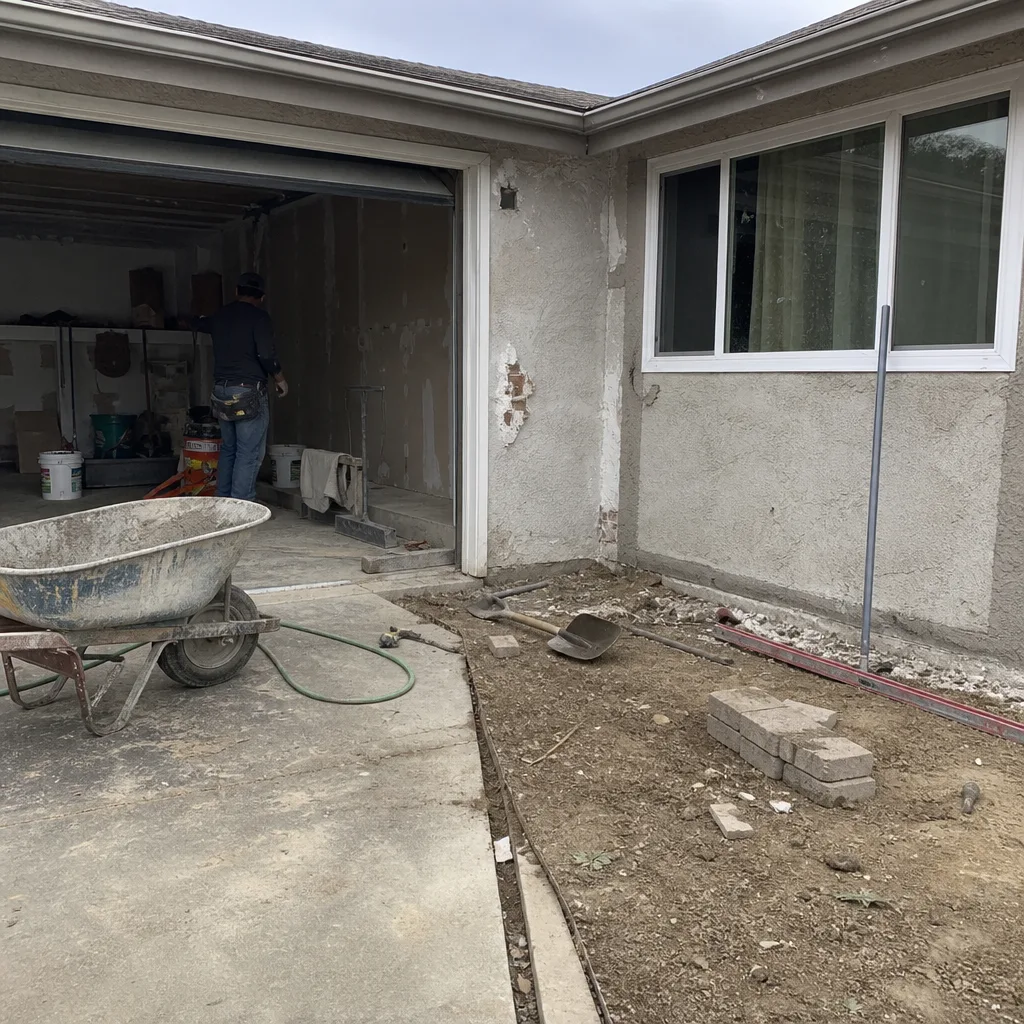
3. Stucco crack sealing. Stucco expands and contracts with temperature shifts, and Santa Clarita’s 40-degree swings between summer highs and winter lows are exactly what produces hairline cracking. Small cracks under 1/8 inch can be sealed with an elastomeric patching compound. Wider cracks, especially those at corners or around windows, may indicate structural movement and should be evaluated before sealing. A sealed crack stops water from getting behind the stucco, where it can rot the building paper and framing underneath.
For a comprehensive winter prep that follows the same standards we use on every Home Renovation in Santa Clarita project, expect to spend $400 to $900 for a handyman-level drainage regrade, caulking, and stucco patch across an average 1,800-square-foot home. That’s dramatically less than the $8,000 to $15,000 in remediation if water intrudes behind stucco and into framing.
Spring Construction Window (March to May): Why This Is Santa Clarita’s Best Time for Exterior Work
If you’re planning exterior construction in Santa Clarita, the window between March and May is when conditions and contractor availability line up best. Here’s why:
- Weather cooperation. Spring temperatures in Santa Clarita sit in the 65 to 80 degree range most days. Adhesives cure properly, paint dries without bubbling, roofing shingles seal correctly, and stucco cures at the right rate. Try doing exterior stucco work in July at 105 degrees and you’ll fight rapid curing that produces cracks. Try it in December between rain events and you’ll fight moisture problems.
- Material pricing stability. Exterior materials see predictable price volatility through the year. Spring prices are typically stable before summer demand pushes costs up on everything from lumber to roofing membrane.
- Permit timelines. Santa Clarita’s building department processes a higher volume of permits as summer approaches, which extends turnaround times for roofing, siding, and structural permits. Filing in March usually means faster review and faster issuance.
- Contractor availability. The best roofing and siding crews in Santa Clarita book out 6 to 10 weeks by late spring. Calling in March gets you on the calendar before the summer crush. By June, you’re scheduling for September.
What should you book in spring? Roof replacement, exterior painting, stucco repair and resurfacing, siding installation, window and door replacement, and any structural work that requires a permit and inspections. If the project involves removing or replacing exterior cladding, spring is when the weather gives you the longest window of uninterrupted work days.
We run our Santa Clarita exterior projects on a written-price model: you get a line-item quote for the full scope before work starts, with material allowances and labor broken out. If spring availability matters to you, the best time to call is February. That gives you time for the estimate, the permit, and the scheduling without losing the spring window.
For homeowners planning a larger project, the spring window is also the right time to think about integrating exterior work with interior upgrades. A Bathroom Remodeling in Santa Clarita job that includes window replacement or exterior wall repair is easier to coordinate when both scopes can run in the same period.
Summer Heat Management (June to September): What Extreme Heat Does to Your Home’s Exterior
Santa Clarita hits 90-plus degrees on 60 to 80 days per year, with summer highs commonly crossing 100 in the Newhall and Canyon Country corridors. That sustained heat does quiet, cumulative damage to the materials that protect your home’s exterior. The damage isn’t dramatic, but it compounds year after year.
Here’s what heat actually does to common building materials:
- Asphalt shingles. Extreme heat accelerates granule loss and causes the asphalt to dry and become brittle. The shingles don’t leak immediately; they lose their flexibility, which means the next wind event lifts them easier, and the next hail event breaks them easier. Homes in Santa Clarita with full sun exposure on south and west roof planes show faster shingle aging than the same roof on a shaded lot.
- Caulk and sealants. This is the most obvious heat casualty. The caulk around windows, doors, and expansion joints expands in the heat, then contracts overnight. After a few hundred of those cycles, it cracks and pulls away. That’s why we recommend a full caulking check every September, not every three years.
- Exterior wood and composite trim. Wood trim expands and contracts with moisture and temperature, but the SCV’s near-zero humidity in summer draws moisture out of the wood fast. The result is splitting, warping, and paint failure at the joints. Composite trim like James Hardie’s fiber cement products holds up better because they don’t move with moisture the way natural wood does, which is why we recommend them for Santa Clarita homes that take the brunt of west-facing afternoon sun.
- Stucco. Repeated thermal expansion opens hairline cracks, especially at corners and around openings. The cracks themselves are cosmetic at first, but every winter rain takes advantage of them. Sealing stucco cracks before each rain season is the most cost-effective exterior maintenance you can do in this climate.
- Window seals and frames. Double-pane windows lose their insulating gas faster in extreme heat, and vinyl frames can soften and deform on the hottest days. If you see condensation between panes or windows that no longer open smoothly, the heat has done its damage.
What’s worth fixing versus monitoring? Active leaks, separated caulk joints, and cracks wider than 1/8 inch are worth fixing now. Granule loss on an aging roof is worth monitoring, but it tells you to budget for replacement in the next 3 to 5 years rather than 10. Window seals that have failed are worth replacing before the next summer, because failed seals mean you’re paying to cool air that’s leaking out through the glass.
Common Mistakes to Avoid
- Following a national maintenance calendar. The standard four-season guide assumes you’re dealing with snow, ice, and freezing pipes. Santa Clarita’s threats are fire, wind, and heat. If your maintenance schedule doesn’t account for Santa Ana winds and Red Flag conditions, it’s built for a different climate.
- Waiting until the first rain to check drainage. By the time water is pooling against your foundation, the damage has started. Check grading and downspouts in October or November, before the December rain window opens.
- Ignoring small stucco cracks because they’re “just cosmetic.” Every crack is a future water-intrusion point. A $15 elastomeric patch today prevents a $3,000 stucco repair and framing remediation down the line.
- Clearing gutters only once per year. In Santa Clarita, gutters collect debris year-round: spring pollen, summer dust, fall leaves, and winter rain debris. Check them quarterly, especially before Santa Ana season, when dry gutter debris becomes an ember trap.
- Skipping the post-wind roof check. After a 50 mph Santa Ana event, the roof needs a visual check even if there’s no leak. Lifted shingles and torn flashing don’t leak immediately, but they invite the next rain event in with open arms.
- Trying to do major exterior work in July or August. Roofing, stucco, and painting all suffer in extreme heat. Materials cure wrong, crews work slower, and the result is often a shorter lifespan than the same work done in spring.
- Ignoring tree-to-structure clearance until a branch is touching the roof. Wind-bent branches that are close but not touching can snap during the next Santa Ana event. The 10-foot clearance guideline exists for a reason.
When to Call a Professional
Some seasonal maintenance is DIY territory: caulking a window, clearing a gutter, checking for visible damage. Other work needs a licensed contractor. Call a professional when you see lifted or missing shingles after a wind event, when stucco cracks are wider than 1/8 inch or show displacement, when drainage issues require regrading, when roof-to-wall flashing is compromised, or when you need ember-resistant vent upgrades before fire season. If you’re not comfortable on a ladder or can’t safely access your roof plane, don’t push it. Roof falls are one of the most common homeowner injuries. Sawyer Remodel Santa Clarita offers free estimates in Santa Clarita – call (661) 592-1977 and we’ll put a written price in your hands before any work starts.
Frequently Asked Questions
Proactive seasonal maintenance for an average 1,800-square-foot Santa Clarita home runs $800 to $2,500 per year when spread across fire-season vent screening, post-wind inspections, caulking and stucco patching, gutter cleaning, and minor roof repairs. Larger homes or homes with extensive stucco or roofing needs can run higher. Call (661) 592-1977 for a written line-item estimate specific to your home.
Fire-season prep should be scheduled in August or early September, before the first Santa Ana wind event of the fall and before Red Flag conditions arrive. This gives you time to install ember-resistant vents, clear defensible space, inspect the roof-to-wall transitions, and trim tree clearances before fire danger peaks in October and November.
Inspect your roof at least twice per year in Santa Clarita: once in early fall before Santa Ana season starts, and once after any significant wind event of 40 mph or higher. Spring inspections are also useful for catching winter rain damage early. Most Santa Clarita homeowners should expect 3 to 4 roof checks per year given the wind and fire exposure in this area.
March through May is the best window for exterior remodeling in Santa Clarita. Temperatures are moderate for material curing, rain risk is low, permit timelines are faster than summer, and contractor availability is better before the summer backlog hits. Book in February to secure the spring window.
Most seasonal maintenance work does not require a permit: caulking, gutter cleaning, stucco crack patching, vent screening, tree trimming, and minor roof repairs are all typically permit-exempt. Structural work like roof replacement, window replacement, or stucco resurfacing may require a permit depending on scope. For details, see Construction Permits, Codes & Inspections in CA: What You Need to Know, or call (661) 592-1977 and we’ll handle the permit determination for you.
After a Santa Ana wind event, inspect your roof from the ground first for visible lifting or missing shingles, then schedule a roof inspection with a licensed contractor if you spot any signs of damage. Lifted flashing and exposed underlayment won’t always leak immediately but become serious problems during the next rain or wind event. Minor wind-damage roof repairs in Santa Clarita typically run $300 to $1,200; call (661) 592-1977 for a written quote on your specific damage.
The Bottom Line

Santa Clarita homes fail on a different calendar than the rest of the country. The threats are fire in the fall, wind all through late autumn, intense winter rain bursts, and six months of heat that quietly breaks down every exterior seal. The homeowner who inspects vents in August, walks the roof after every Santa Ana event, seals stucco cracks before December, schedules exterior work in spring, and checks caulk joints every September is the homeowner who avoids the $10,000 surprise. The homeowner who follows a national maintenance calendar is the one we get called to fix. Get on the SCV rhythm. Start with the season coming next, not the one on the national calendar, and explore more guides & resources for year-round Santa Clarita home care.
Written by Luca Romano, Owner at Sawyer Remodel Santa Clarita, serving Santa Clarita since 2005.
See the difference
 Before
 After
After Before
 After
After Before
 After
After